

Links Miscellanea
A few recent talks, videos, write-ups, and response pieces

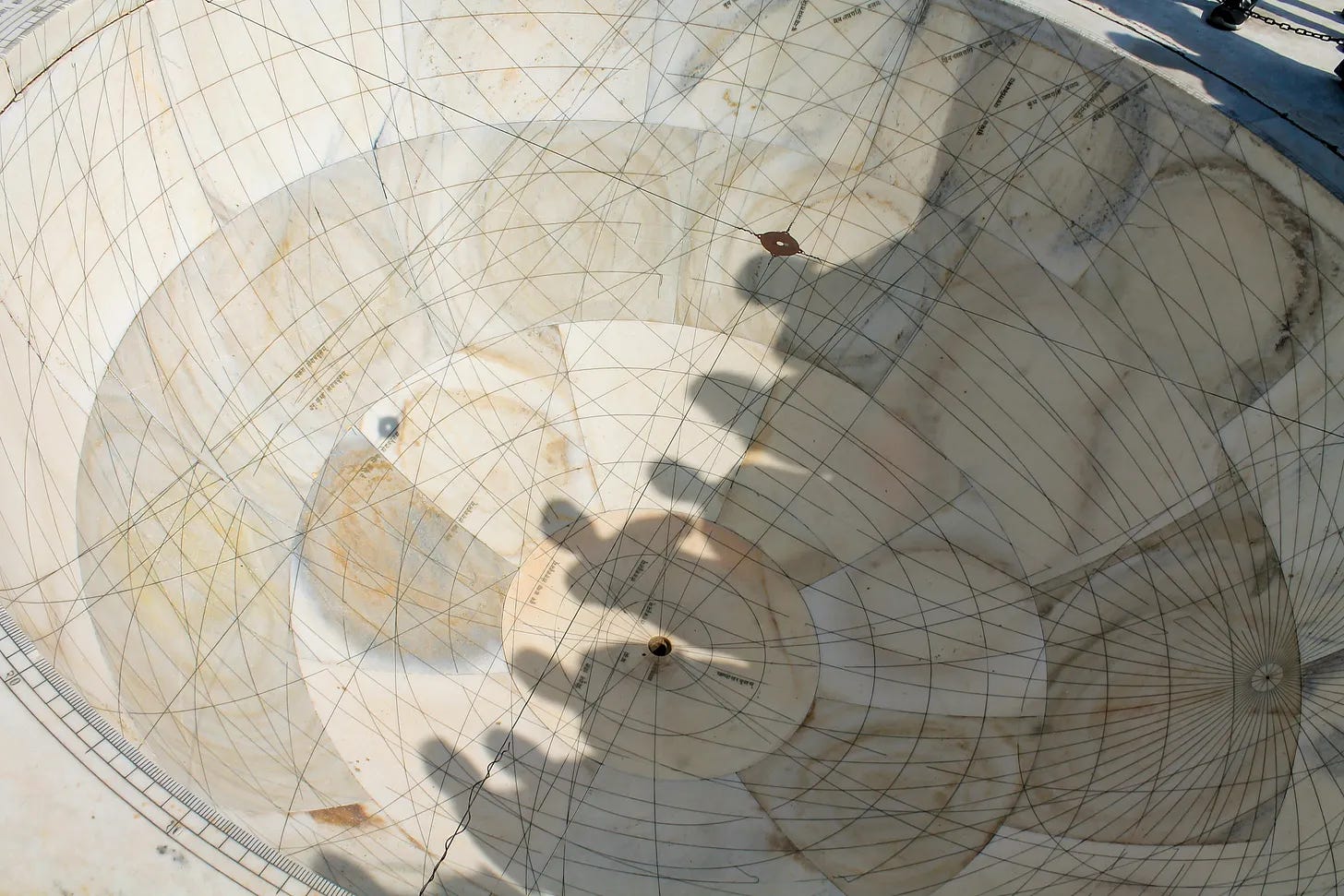
Greetings, dear readers, here are a few recent recordings and write-ups that I’ve been meaning to collect in one place, all picking up a common thread of reflection on attention, perception, and the practices that shape both.
I’ve also included some supplementary reading that offers additional background on the ideas and themes at work in these talks. Slowly but surely, something more substantial is beginning to emerge here . . .
(Unrelated: This new drop caps feature looks good, no?)
Recent links:
“Attention as an Art Form” – My Imbue talk in San Francisco, part of their “Art of Being a Human Series” w/ Ashley Zhang, is now up.
“10 Theses on Attention” – Ashley’s excellent write-up of that dialogue.
“Attention Is an Art Form: Practice, Memory, and Orientation” – Video of my talk for the Toronto Society last fall. You can also find the transcript here. (I posted this link on social media before, but I neglected to share it here on the newsletter.)
“Scrolling Is a Form of Prayer” – Mary Harrington puts some of my writing to work in her ongoing series on digital reading and inner life (with special attention paid to notions of cognitive sovereignty in our algorithmic age).
Further reading:
I’ve been working my way up to a more robust philosophy of attention, rooted in practice. These are a few of the preliminary pieces that informed the talks:
“Practice, Perception, and Being: A Sequential Account” – In this piece, I argue that perception begins within an originally given horizon of significance that precedes explicit reflection and makes skillful intelligibility possible.
“Attention Is First Philosophy” – I make the positive case, with illustrations from Aristotle, Descartes, and Merleau-Ponty, that philosophy begins in the disciplined act of attending to that more primary horizon.
“Attention Is an Art Form” – This essay develops the claim that attention is itself shapeable, and that contemplative practices of reading and writing—among innumerable other exercises—can transform the structure of perception.
“Eidos and the Art of Perception” – Next, I place all of these claims in a realist frame, suggesting that practice changes the relation between “appearance” and “reality” by shaping the conditions in which form—or eidos, that which comes to presence on the horizon—is disclosed in perception.
“Perceptual Learning and the Necessity of Form” – Through a dialogue with perceptual learning research, I then offer that the difference between novice and expert perception points beyond constructivism to the necessity of form, and ultimately, to a view of intrinsic value, rooted in theōria.
What I am circling in these essays is a kind of negative space, slowly taking shape, that suggests an approach to philosophy in which thought begins from our immersion in a world already charged with significance, and then from the disciplined attention by which that significance comes to presence in cultivated perception.
One entailment of this view is that philosophy is something more consequential than an interpretation or construction of reality but is the vehicle, or medium, through which reality comes to presence through our practices in the first place.
In short, practice bears on our relation to reality at the level of disclosure itself, shaping the conditions under which form appears in perception, giving us a picture of philosophy as the cultivation of perceptual intelligibility—a way of life ordered to the deepening of an attention immersed in a world of charged significance.
These pieces emphasize practice, attention, and orientation. There is a passing nod to the role of memory in these essays, but I have in view something more substantial along these lines in future work. Naturally, Bernard Stiegler has been on my mind as of late, and especially the way he links memory with technics.
So, I’m working my way over towards something of a quintet of ideas—practice, attention, orientation, memory, and technics. More soon.